


How to Repair Porcelain Tub Damage Without Replacing It

A small chip near the drain or a worn patch along the bottom of the tub can make the entire bathroom feel older and less clean. Learning how to repair porcelain tub damage can help protect the fixture, improve its appearance, and delay a costly replacement. The right repair depends on whether you are dealing with a minor chip, a hairline crack, stubborn staining, or a finish that has simply lost its shine.
For many Northeast homeowners, landlords, and sellers, repairing or refinishing an existing tub is a practical alternative to demolition. It preserves a fixture that may still be structurally sound while giving the bathroom a fresher, more polished appearance.
First, Confirm What Kind of Tub You Have
Homeowners often call any glossy white bathtub a porcelain tub, but the surface may be porcelain enamel over cast iron or steel, acrylic, fiberglass, or a previously refinished coating. This matters because repair materials do not perform the same way on every surface.
A porcelain-enamel tub usually feels very solid and cold to the touch. A magnet may stick to a steel tub, while a cast-iron tub is especially heavy and typically produces a deeper sound when tapped. Acrylic and fiberglass tubs feel warmer and may flex slightly under pressure.
If the damage is limited to the glossy surface, a repair may be straightforward. If the tub is flexing, rusting heavily, leaking, or cracked through the body of the fixture, the problem may require a more involved repair or replacement. Treating a structural issue with a cosmetic patch rarely produces a lasting result.
How to Repair Porcelain Tub Chips and Small Gouges
Small chips are among the most common bathtub problems. They often happen when a showerhead, glass bottle, tool, or other hard object falls onto the surface. Even a tiny chip should be addressed promptly because exposed metal beneath a porcelain-enamel surface can rust, spread, and stain the surrounding finish.
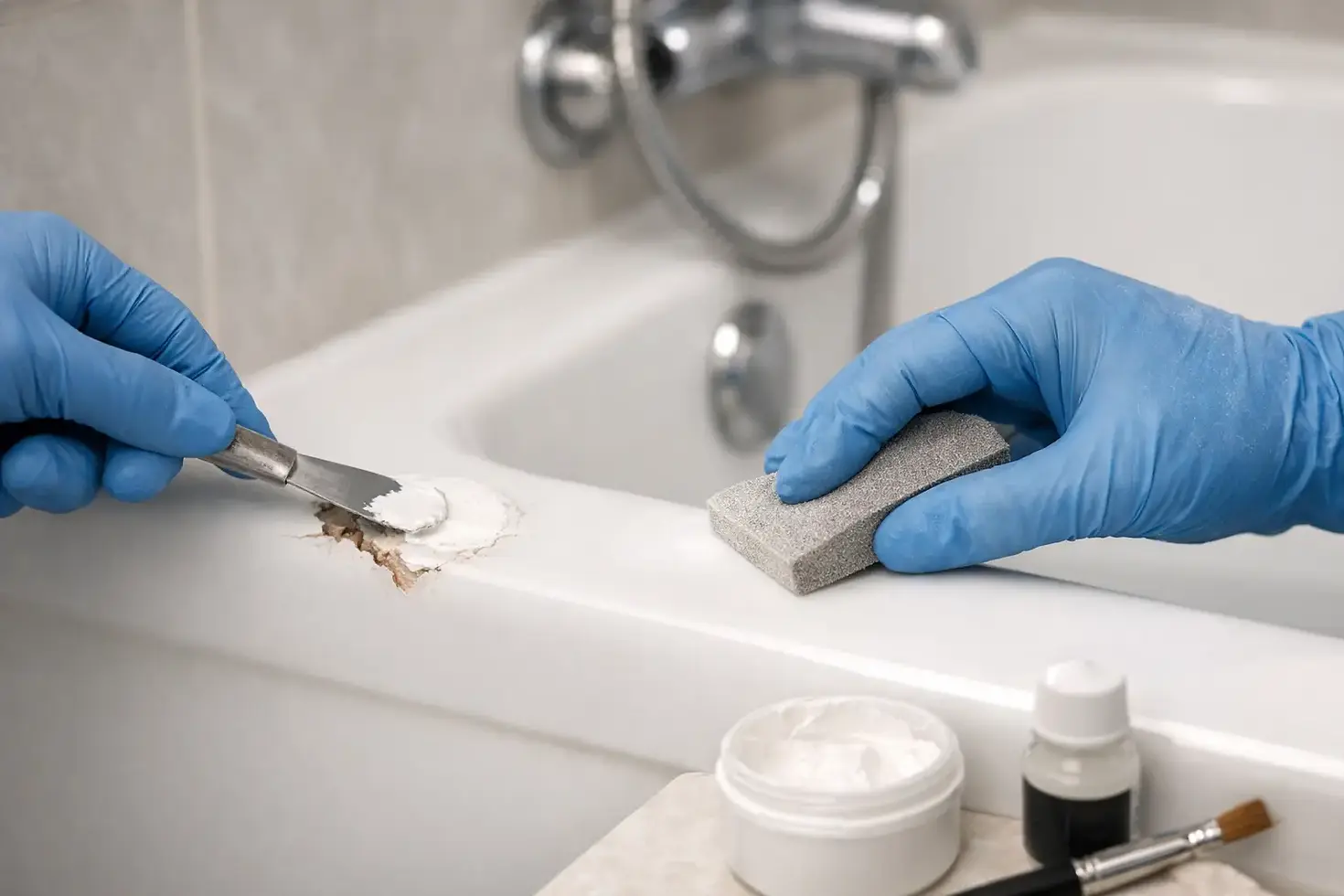
Start by cleaning the damaged spot with a nonabrasive bathroom cleaner, then dry it completely. Do not apply a repair compound over soap residue, moisture, rust dust, or loose material. If rust is visible inside the chip, carefully remove only the loose rust with very fine sandpaper. Avoid sanding beyond the damaged area, since aggressive sanding can create a dull patch around the repair.
A porcelain chip repair kit generally includes a filler or epoxy compound and a color-matched touch-up coating. Apply the product in thin layers according to the manufacturer’s directions. Overfilling can leave a raised bump, while underfilling can leave a visible dip that catches dirt.
Allow the repair to cure fully before using the tub. Cure times vary, and rushing this step is one of the main reasons DIY touch-ups fail. Once cured, the repaired area may be less noticeable, but it may not blend perfectly with an older, faded, or textured finish. DIY kits are best viewed as a practical spot repair, not a complete visual restoration.
What to Do About Hairline Cracks
Hairline cracks need closer attention because their cause matters as much as their appearance. A shallow crack in an old finish can sometimes be repaired. A crack caused by movement beneath the tub, impact damage, or a failing fiberglass base is more likely to return.
For a porcelain-enamel tub, inspect the crack carefully. If it is only in the coating and there is no flexing, moisture, or rust, a professional repair or refinishing process may restore the surface. If the crack reaches metal or exposes a dark underlayer, it should be repaired before corrosion spreads.
For fiberglass and acrylic tubs, cracks can sometimes be repaired with a color-matched composite material. However, a tub that flexes when someone stands in it may need support beneath the fixture before a surface repair will hold. This is one of those situations where the least expensive fix is not always the most cost-effective one. Repeated patching can cost more over time than correcting the underlying issue.
Remove Stains Without Damaging the Finish
Not every discolored tub needs refinishing. Mineral deposits, soap buildup, and surface grime can often be removed with gentle cleaning. Start with a nonabrasive cleaner and a soft sponge or microfiber cloth. For mineral residue, use a cleaner suitable for the tub’s material and test it in a hidden area first.
Avoid steel wool, harsh scouring powders, highly abrasive scrub pads, and strong chemicals that are not labeled for bathtub use. These products can scratch porcelain, wear down a previous reglazing coating, and make the surface more likely to hold dirt. A roughened finish also loses the easy-clean feel that homeowners want from a refreshed bathroom.
If stains remain after thorough cleaning, the issue may be discoloration within the old finish rather than dirt sitting on top of it. Yellowing, permanent dullness, etched areas, and widespread discoloration are often better candidates for professional reglazing than for stronger cleaners.
When Reglazing Is the Better Repair
Spot repairs make sense for one or two small chips on an otherwise attractive tub. Reglazing becomes the better choice when the surface has widespread wear: dullness around the drain, recurring stains, multiple chips, rust spots, discoloration, or an outdated color that brings down the room.
Professional bathtub reglazing is designed to renew the visible surface without removing the existing fixture. The tub is prepared, repaired where needed, and coated to create a smooth, clean-looking finish. The result can make an aging bathroom look dramatically newer without the dust, demolition, plumbing work, and disruption of a full tub replacement.
This approach is especially useful for rental properties, homes being prepared for sale, and homeowners who want a visible bathroom upgrade while keeping renovation costs under control. Reusing a sound tub also keeps a large, heavy fixture out of the landfill.
The trade-off is that reglazing is a specialized process. Surface preparation, repairs, ventilation, and curing all affect the finished appearance and durability. A rushed coating or poor preparation can peel, chip, or look uneven. For a finish meant to improve both the look and hygiene of the bathroom, professional application is usually the more dependable option.
Keep a Repaired or Reglazed Tub Looking New
Once the tub is repaired, gentle care helps protect the finish. Use nonabrasive cleaners, rinse away soap residue, and avoid leaving bath mats with suction cups in place for long periods. Suction cups can pull on a refinished surface, especially when moisture becomes trapped beneath the mat.
Do not use abrasive powders, harsh scrub brushes, or caustic drain chemicals unless they are specifically approved for your tub surface. If a drain is slow, address the clog carefully rather than allowing standing water and chemical cleaners to sit on the finish.
Small habits make a difference. Drying the tub after use, fixing a dripping faucet, and repairing fresh chips quickly can prevent stains, rust, and more extensive damage later.
Know When to Call a Professional
A professional assessment is worthwhile when there are several damaged areas, visible rust, cracks that keep returning, peeling from an old coating, or a finish so worn that cleaning no longer improves it. It is also the smart choice when you want the tub to look consistently smooth and refreshed instead of patched in several places.
Majestic Bathtub & Tile Reglazing helps homeowners and property owners restore worn bathroom surfaces with less mess and downtime than a full replacement project. A repaired or reglazed tub can bring back the clean, bright appearance that makes a bathroom feel cared for - without tearing out a fixture that still has years of useful life ahead.


Comments