


Bathtub Rust Removal Without Replacing Your Tub

A rust stain around the drain can make an otherwise clean bathroom feel neglected. Worse, what looks like a small orange spot may signal a worn finish, exposed metal, or moisture reaching areas it should not. The right approach to bathtub rust removal can improve the look of your bathroom quickly, but the best fix depends on whether the rust is sitting on the surface or coming from the tub itself.
For homeowners, landlords, and sellers, replacement is not always the practical answer. Removing an old tub can mean demolition, plumbing work, tile damage, days of disruption, and a much larger bill. In many cases, professional repair and reglazing can restore the existing fixture to a smooth, bright, clean-looking finish without turning the bathroom into a construction zone.
What Causes Rust in a Bathtub?
Rust forms when iron or steel is exposed to water and oxygen. In a bathroom, that exposure can happen slowly through a chip in the finish, a crack around the drain, worn enamel, or a fixture that has simply reached the end of its protective coating.
Older cast-iron and steel tubs are especially prone to rust once their original porcelain or enamel surface is damaged. A dropped shampoo bottle, harsh abrasive cleaner, or years of normal wear can create a small opening in the finish. Water works its way in, the metal oxidizes, and an orange or brown stain begins to spread.
Not every rust-colored mark means the tub is rusting. Iron in water, a rusty drain component, metal shaving cans, and certain cleaning products can leave surface stains on acrylic, fiberglass, porcelain, or enamel tubs. The difference matters. Surface staining may clean up easily, while active rust needs repair before it grows into a more expensive problem.
How to Tell If the Rust Is Surface-Level or Structural
Start by looking closely at the affected area after the tub is dry. A flat orange or brown stain with no roughness may be residue from water or a metal object. If it disappears with a gentle, nonabrasive cleaner, the tub surface may still be intact.
Active rust often looks different. You may notice rough or pitted metal, bubbling beneath the finish, flaking enamel, chips with orange edges, or a stain that returns soon after cleaning. Rust near the drain, overflow plate, bottom of the tub, or along an old chip deserves particular attention because those locations see frequent moisture.
Pressing hard on a damaged area is not a good test. If the surface is badly corroded, force can break away more material or enlarge a weak spot. A professional assessment is the safer move when a tub feels soft, appears deeply pitted, has a visible hole, or shows rust spreading under the coating.
When DIY Bathtub Rust Removal Makes Sense
A homeowner can often address a small, isolated stain when the finish is otherwise smooth and intact. The goal is to remove discoloration gently, not scrub away the protective surface.
Use a soft cloth or non-scratch sponge with a cleaner made for the tub material. Avoid steel wool, aggressive scouring powders, and highly abrasive pads. These may make a temporary stain look better while leaving tiny scratches that collect soap residue and make future staining more likely.
For minor rust around a removable drain cover or overflow plate, cleaning or replacing the corroded hardware may solve the issue. Be careful around old plumbing parts. If a drain is stuck, leaks, or has rust beneath the flange, it is easy to create a plumbing problem while trying to improve the appearance.
DIY touch-up products can help conceal a very small chip, but they come with trade-offs. Color matching is difficult, brush-on repairs may not blend with the surrounding finish, and a patch can fail if moisture remains underneath. They are best viewed as short-term maintenance, not a dependable solution for a stained or visibly worn tub.
When Rust Removal Needs Professional Repair
Professional bathtub rust removal is the smarter investment when rust has reached the metal, returned repeatedly, or spread beyond a small spot. Cleaning alone cannot stop oxidation beneath damaged enamel. The affected area must be properly prepared, repaired, sealed, and refinished so water cannot continue reaching the substrate.
A quality refinishing process typically begins with thorough surface preparation. The damaged finish is cleaned and treated, loose material is removed, and chips, pits, or small rusted areas are repaired. The tub is then coated with a durable new finish designed to create a smooth, uniform appearance.
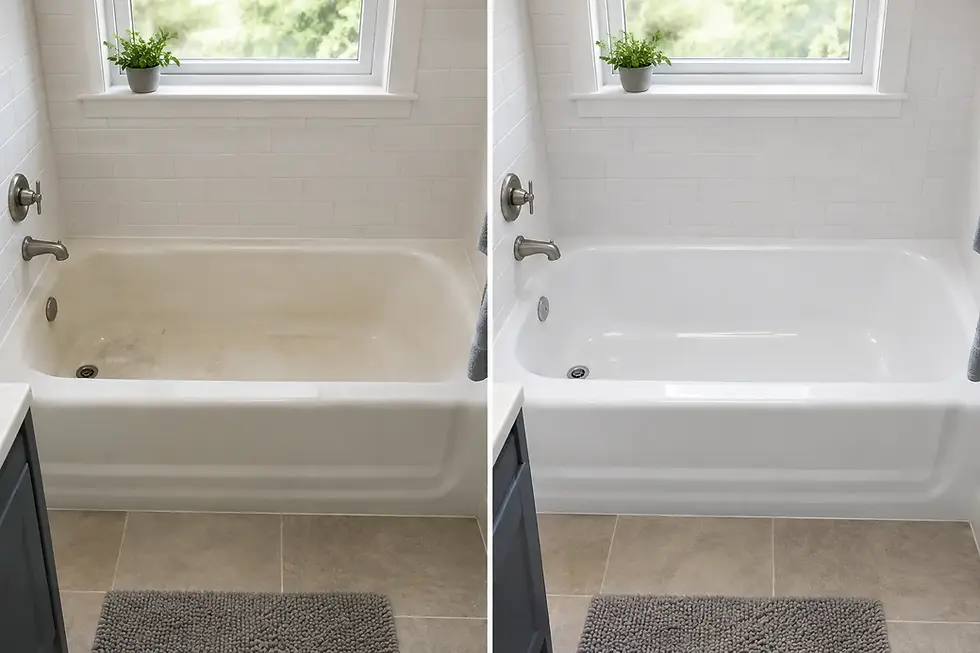
This approach is especially valuable for cast-iron tubs with solid structure but tired surfaces. These fixtures were built to last, and replacement often means giving up a substantial tub that only needs cosmetic and surface restoration. Reglazing can eliminate the visual distraction of rust, chips, dullness, and discoloration while preserving the tub already fitted to the room.
There are limits. A tub with extensive corrosion, large holes, major structural damage, or plumbing failure behind the wall may require replacement or a broader bathroom repair. An honest evaluation should consider the tub's material, the depth of corrosion, the condition of the drain area, and your plans for the property.
Why Reglazing Is Often Better Than Replacement
Replacing a bathtub sounds straightforward until the surrounding work begins. Many older tubs are set against tile, inside tight alcoves, or connected to plumbing that has not been touched in decades. Removal can involve opening walls, replacing tile, adjusting plumbing, repairing floors, and coordinating several trades.
Refinishing avoids much of that disruption. Instead of tearing out the fixture, the existing tub is restored in place. That can save money, reduce downtime, and keep usable materials out of the landfill. For a rental property, a home sale, or a bathroom refresh on a sensible budget, the difference is significant.
The visual payoff is immediate. A properly reglazed tub can make the whole room feel cleaner and newer, even if the rest of the bathroom has not changed. Pairing a tub restoration with tile reglazing, regrouting, or updated hardware can create a coordinated look without the cost of a full renovation.
For older adults and households planning to age in place, a rusted, hard-to-clean tub can also be a good time to consider a tub-to-shower conversion. This is not necessary for every bathroom, but a walk-in shower may improve accessibility, reduce step-over risk, and simplify daily maintenance.
Protect Your Restored Tub From Future Rust
Once rust has been removed or the tub has been refinished, simple care helps protect the new surface. Rinse away soap and bath product residue after use, wipe standing water from damaged-prone areas, and repair drips from faucets or showerheads promptly. Constant moisture around the drain is an invitation for stains and corrosion.
Choose nonabrasive bathroom cleaners and soft sponges. Skip steel wool, abrasive powders, harsh chemical mixtures, and suction-cup bath mats unless the refinishing professional specifically approves them. These products can scratch or pull at a coated surface over time.
It also helps to avoid leaving metal cans, razors, or wet containers on the tub ledge. A small amount of trapped moisture beneath metal can leave a stain that looks like a much bigger problem. Address fresh chips early, before water can reach the layer below.
A Cleaner Bathroom Starts With the Right Repair
Rust does not have to force a full bathroom remodel. If the tub is structurally sound, targeted repair and professional refinishing can provide a clean, durable-looking result at a fraction of the disruption of replacement. Majestic Bathtub & Tile Reglazing helps homeowners and property owners restore worn tubs and bathroom surfaces with practical solutions built around visible transformation.
A rust stain may be small, but taking care of it early protects the fixture, improves hygiene, and gives your bathroom the fresh appearance it deserves. Request a free estimate when the damage is more than surface-level, and choose a repair that makes the room feel renewed rather than simply covered up.


Comments